
Blog
Vesugen: The Vascular Bioregulator Peptide

Vesugen: The Vascular Bioregulator Peptide
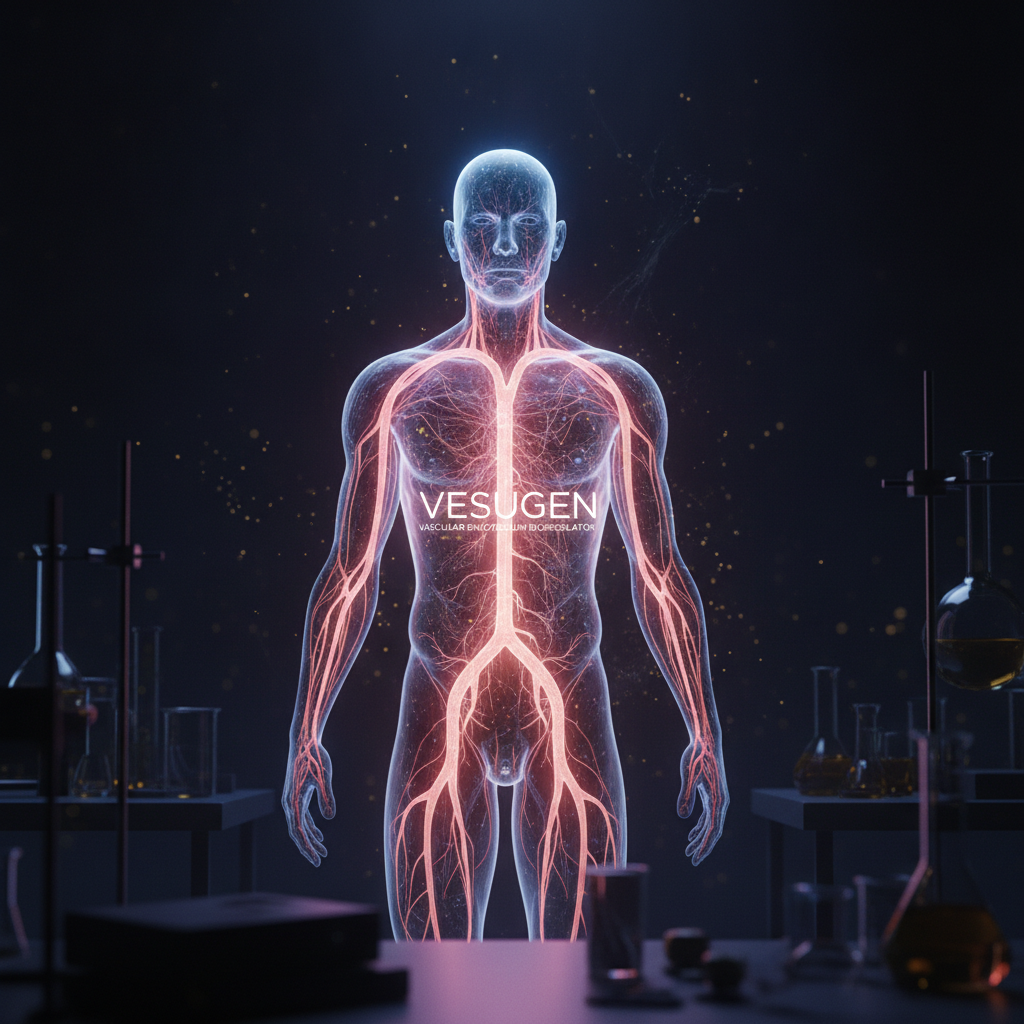
The vascular system is the body’s infrastructure — a network of blood vessels extending over 60,000 miles that delivers oxygen and nutrients to every tissue and removes metabolic waste. At the core of this infrastructure is a single-cell layer called the endothelium, which lines every blood vessel from the largest arteries to the smallest capillaries. Endothelial health is vascular health, and vascular health is, in many respects, the foundation of longevity. Among the peptides studied for their effects on this critical tissue is Vesugen — a synthetic tripeptide derived from the Khavinson bioregulator research program that has been investigated for its role in supporting endothelial cell function and proliferation in aging models.
What Is Vesugen?
Vesugen is a synthetic tripeptide composed of three amino acids: alanine-glutamic acid-aspartic acid (Ala-Glu-Asp). It was developed as part of the bioregulator peptide library created by Professor Vladimir Khavinson — a Russian gerontologist whose research career at the St. Petersburg Institute of Bioregulation and Gerontology spanned several decades. Vesugen was derived from peptides found in the vascular endothelium, the thin cellular lining that controls blood vessel function.
The concept behind Vesugen and the broader Khavinson peptide library is elegant in its simplicity: if short peptides naturally regulate tissue-specific gene expression, and these peptides decline with age, then supplementing them may help restore youthful gene expression patterns.
The Endothelium: Why a Single Cell Layer Matters
The endothelium is deceptively simple in structure — a single layer of flat cells — but extraordinarily complex in function:
- Vascular tone regulation: Endothelial cells produce nitric oxide (NO), the primary vasodilator that controls blood vessel diameter and blood pressure.
- Anti-thrombotic surface: A healthy endothelium prevents blood clot formation on vessel walls.
- Inflammation control: Endothelial cells regulate the passage of immune cells and inflammatory molecules.
- Barrier function: Controls what passes from the blood into surrounding tissues.
- Angiogenesis signaling: Mediates new blood vessel formation in response to tissue demands.
As the body ages, endothelial cells undergo several changes: proliferative capacity decreases, nitric oxide production declines, inflammatory marker expression increases, and the endothelial surface becomes increasingly pro-thrombotic.
Vesugen and Endothelial Cell Research
Cell Proliferation in Aging Models
In cell culture studies, Vesugen has been shown to stimulate proliferative activity in endothelial cell populations that exhibit age-related proliferative decline. This effect was observed at very low concentrations — consistent with the Khavinson hypothesis that these peptides function as signaling molecules rather than traditional pharmacological agents.
Studies by Khavinson and colleagues demonstrated that short tissue-specific peptides, including the Ala-Glu-Asp sequence found in Vesugen, could restore proliferative capacity in senescent cell cultures. The effects appeared to be mediated through epigenetic mechanisms — specifically, peptide interactions with DNA promoter regions.
Gene Expression Modulation
The Khavinson research proposes that short peptides can enter cells and interact directly with DNA promoter regions, modulating gene transcription. This proposed mechanism — peptide-mediated epigenetic regulation — suggests tissue-specific effects on cell cycle progression, DNA repair, and anti-apoptotic pathways in endothelial cells.
Functional Endpoints
Beyond proliferation and gene expression, Vesugen research has explored effects on nitric oxide production, inflammatory marker expression, and endothelial barrier integrity.
The Khavinson Peptide Family
Vesugen is part of a broader family of tissue-specific bioregulator peptides:
- Epithalon (Epitalon) — Pineal gland-derived, studied for telomerase activation and circadian regulation.
- Pinealon — A tripeptide (Glu-Asp-Arg) also pineal-derived, studied for neuroprotective effects.
- Vesugen — The vascular bioregulator (Ala-Glu-Asp), studied for endothelial cell function.
- Other Khavinson peptides — Including Thymogen, Vladilen, and Chonluten.
Research Considerations and Limitations
- Geographic concentration: Most research originates from Russian and Eastern European institutions. Independent replication would strengthen the evidence.
- Mechanistic debate: The proposed peptide-DNA interaction mechanism is not universally accepted.
- Translational data: Robust human clinical data is limited.
- Dose optimization: Optimal dosing parameters remain to be determined.
- Long-term effects: Long-term safety and efficacy data are limited.
Vesugen in the Context of Vascular Longevity
Cardiovascular disease remains the leading cause of death worldwide, and vascular aging is now understood to drive not only heart disease but also cognitive decline, kidney disease, and systemic inflammation. The endothelium sits at the center of this process. If Vesugen genuinely supports endothelial cell function in aging tissues, its relevance extends beyond vascular biology alone — healthy endothelium means healthy blood flow to every organ.
Frequently Asked Questions
Explore Vesugen for Your Research
High-purity Vesugen (10mg) available for research applications. HPLC-verified, third-party tested.
Disclaimer: This content is for informational and educational purposes only. It is not intended as medical advice, diagnosis, or treatment. All peptides discussed are sold for research purposes only and are not approved by the FDA for human consumption. Always consult a qualified healthcare provider before making decisions about your health. Choice Peptide Labs does not claim that any product discussed can treat, cure, or prevent any disease.

