
Blog
What Is GHK-Cu? A Research-Backed Guide to the Gene-Modulating Copper Peptide

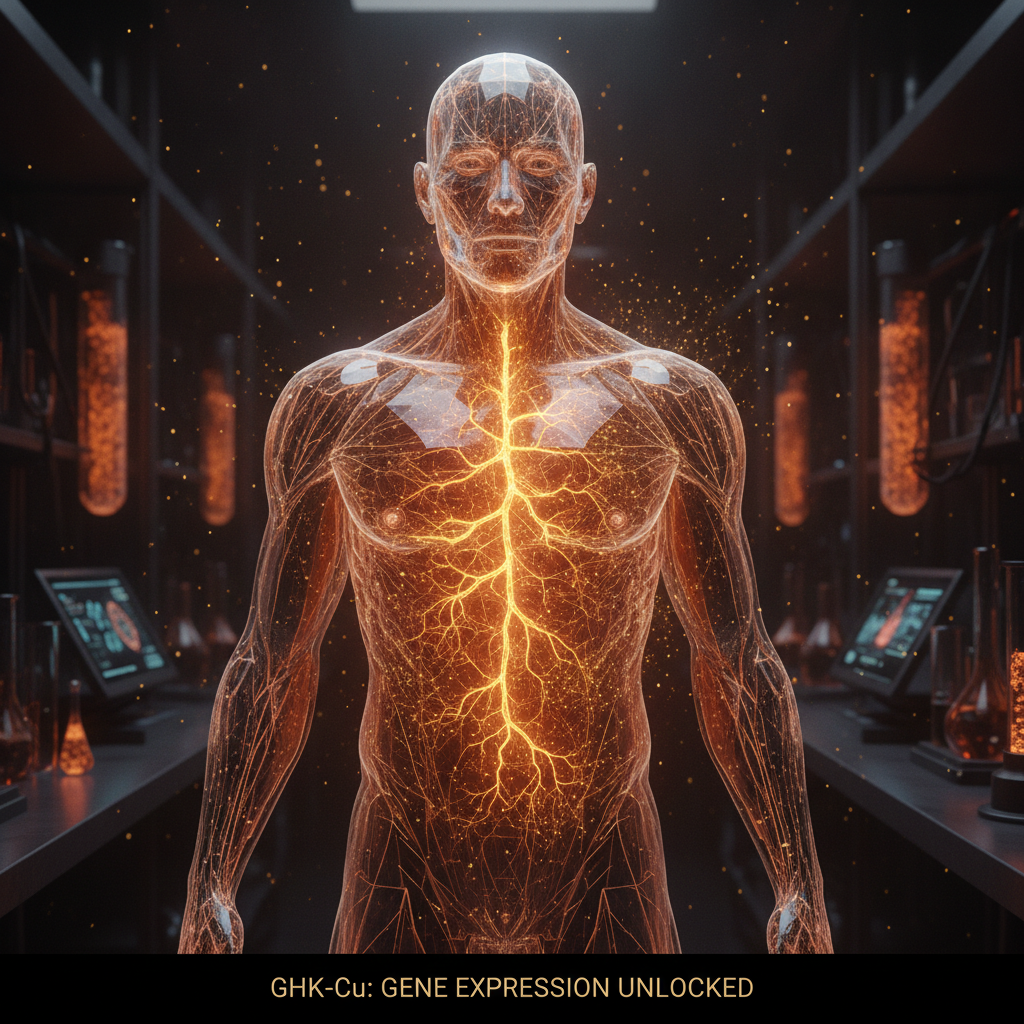
What Is GHK-Cu? A Research-Backed Guide to the Gene-Modulating Copper Peptide
Choice Peptide Labs | 14 min read | 50+ years of research | June 2026
GHK-Cu is a naturally occurring copper-binding tripeptide that modulates the activity of over 4,000 human genes — approximately 32% of the genome. First identified by Loren Pickart in 1973, it’s one of the most studied small molecules in regenerative biology.
What Is GHK-Cu?
GHK-Cu (glycyl-L-histidyl-L-lysine-copper) is a small, naturally occurring copper-binding tripeptide found in human plasma, saliva, and urine. It was first isolated by Loren Pickart in 1973 during research on liver tissue regeneration. Its concentration declines roughly 60% between ages 20 and 60.
Source: Pickart, L., et al. PMC6073405. PMC
The Landmark Discovery: 4,000+ Genes
Gene expression analysis using the Broad Institute’s Connectivity Map database revealed that GHK-Cu modulates over 4,000 human genes — approximately 32% of the genome.
Upregulated genes:
- Extracellular matrix synthesis: collagen, glycosaminoglycans, decorin, elastin
- Nrf2 antioxidant defense pathways
Downregulated genes:
- NF-κB inflammatory pathway genes
- Iron-mediated oxidative stress genes
50 Years of Research: A Timeline
1973: Pickart isolates GHK-Cu from human plasma during liver tissue research.
1980s–1990s: Dermatology and cosmetic research. Effects on collagen synthesis and skin repair studied extensively.
2000s: Broad Institute Connectivity Map analysis reveals 4,000+ gene modulation — shifts paradigm to genome-wide research.
2010s–2020s: Research expands from dermatology into regenerative biology, anti-cancer modulation, and redox homeostasis.
2026: Springer review describes GHK-Cu as “a representative model system linking copper biology to regenerative medicine.”
Source: Springer, 2026. Springer
The Copper Connection
GHK-Cu delivers copper to cells in a bioavailable form. Copper is required for:
- Lysyl oxidase — cross-links collagen and elastin fibers
- Superoxide dismutase (SOD) — primary antioxidant enzyme
- Cytochrome c oxidase — mitochondrial energy production
- Angiogenesis — new blood vessel formation
This copper-delivery function is in addition to GHK-Cu’s gene expression effects — making it a dual-mechanism compound.
What Makes GHK-Cu Different
- Epigenetic modulation: Shifts overall gene expression profile toward a regenerative state
- Genome-wide reach: 4,000+ genes — no other small peptide shows this breadth
- Reversibility: Changes are reversible when compound is removed
- Age-related decline: Levels drop ~60% between ages 20 and 60
“GHK-Cu does not act on a single receptor. It operates epigenetically, effectively rebooting the genetic expression of aged cells back to a younger state.”
Dermatology Research
- Collagen synthesis: Upregulates COL1A1 and COL1A2 genes
- Elastic fibers: Stimulates elastin and fibrillin gene expression
- Wound remodeling: Promotes orderly collagen organization vs scar tissue
- Anti-inflammatory: Downregulates inflammatory gene expression
- Antioxidant defense: Nrf2 pathway activation against oxidative stress
Source: “Copper Peptides in Regenerative Aesthetic Dermatology.” Wiley, 2025. Wiley
GHK-Cu Decline with Age
- Age 20: Normal plasma levels
- Age 60: ~60% lower
- Correlation: Decline parallels tissue repair capacity and collagen production decrease
Frequently Asked Questions
What does GHK-Cu stand for?
Glycyl-L-histidyl-L-lysine-copper. A tripeptide bound to a copper ion. Found naturally in human plasma.
How many genes does it modulate?
Over 4,000 (~32% of the genome). Broad Institute Connectivity Map data.
Who discovered it?
Loren Pickart, 1973, from human plasma.
How does it decline with age?
~60% lower at age 60 vs age 20. Parallels decline in tissue repair capacity.
How is it different from receptor-based peptides?
Operates epigenetically — shifts overall gene expression profile. Changes are reversible.
What is the copper connection?
Delivers copper for lysyl oxidase (collagen), SOD (antioxidant), cytochrome c oxidase (energy), angiogenesis.
Is it the same as “copper peptide” in skincare?
Yes. Same molecule. Excellent safety record in published research.
Explore GHK-Cu from Choice Peptide Labs
100mg vial · Published COA · USA-stocked · Cold-chain shipped
Disclaimer: For educational purposes only. GHK-Cu is a naturally occurring peptide studied in preclinical and cosmetic contexts. All products from Choice Peptide Labs are for laboratory research use only.

