
Blog
KLOW vs GLOW Blend: What Is the Difference?

KLOW vs GLOW Blend: What’s the Difference?
Choice Peptide Labs | Recovery Research | June 2026
Meta description: KLOW and GLOW are both multi-peptide recovery blends, but they’re not the same. Here’s what sets them apart — and why KLOW adds a fourth compound.
What Is the GLOW Blend?
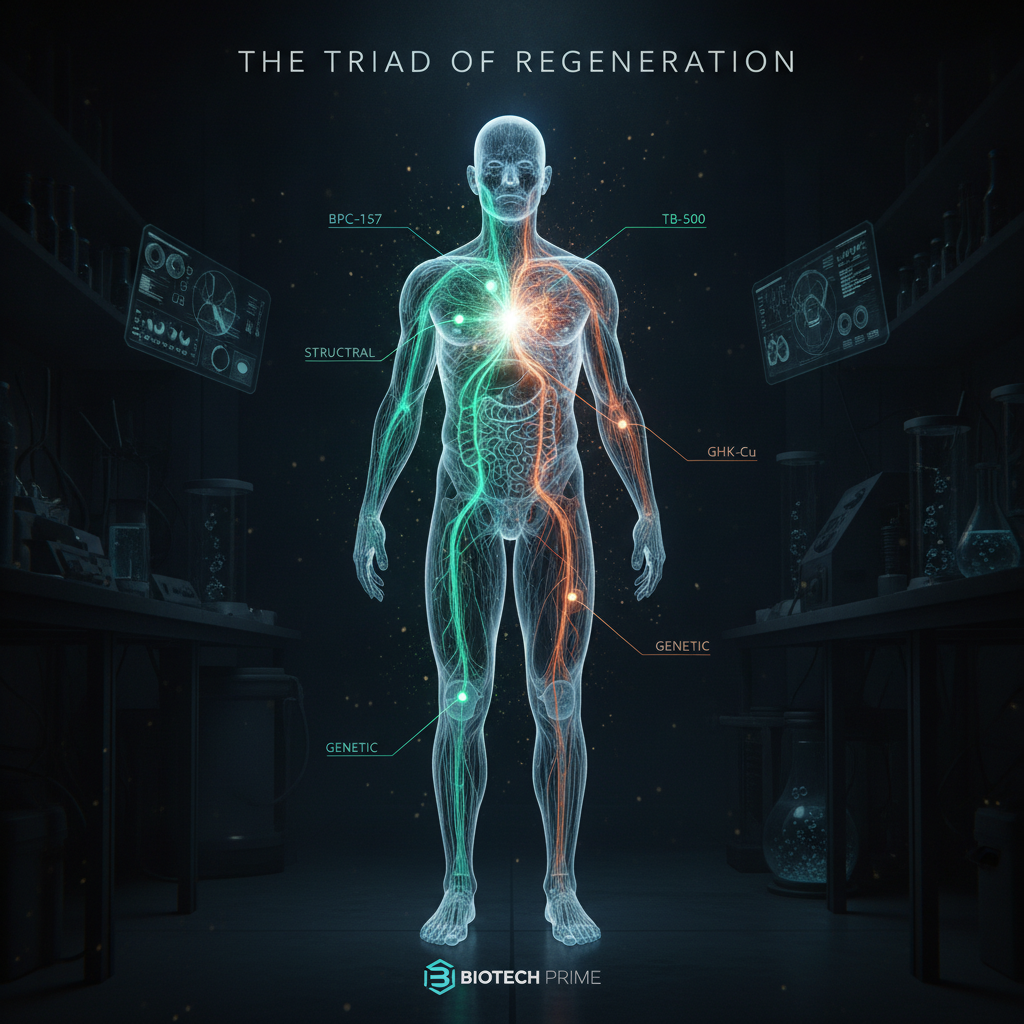
A three-peptide blend: BPC-157 (soft-tissue repair, growth factors), TB-500 (cell migration, actin regulation), and GHK-Cu (gene expression, collagen synthesis). Together, these cover structural, cellular, and genetic aspects of tissue repair through non-overlapping mechanisms.
What Is the KLOW Blend?
KLOW contains everything in GLOW — BPC-157, TB-500, and GHK-Cu — plus a fourth peptide: KPV. KPV (Lys-Pro-Val) is a 3-amino acid tripeptide derived from alpha-MSH that adds a direct anti-inflammatory mechanism through NF-κB pathway inhibition. The “K” in KLOW stands for KPV.
What KPV Adds
KPV inhibits NF-κB — one of the master switches of inflammation — without binding melanocortin receptors (no pigmentation effects). It’s absorbed through the PepT1 intestinal transporter, making it particularly interesting for gut-focused research. It also shows antimicrobial activity.
Side-by-Side Comparison
| Attribute | GLOW | KLOW |
|---|---|---|
| Peptides | BPC-157, TB-500, GHK-Cu | BPC-157, TB-500, GHK-Cu, KPV |
| Vial size | 70mg | 80mg |
| Anti-inflammatory | Indirect | Direct NF-κB inhibition (KPV) |
| Gut inflammation | BPC-157 (cytoprotective) | BPC-157 + KPV (anti-inflammatory + cytoprotective) |
| Antimicrobial | Not directly | Yes — KPV |
| Gene expression | GHK-Cu | GHK-Cu |
| Cell migration | TB-500 | TB-500 |
When to Choose One Over the Other
GLOW — skin biology, collagen remodeling, general tissue repair, gene expression research.
KLOW — gut-specific inflammation, NF-κB overactivation models, chronic inflammation, broader mechanistic coverage.
Neither blend is FDA approved. All products sold for laboratory research use only.
Sources: Pickart et al. (PMC6073405); Getting et al. (PMID: 11282135); PeptideJournal KPV research summary.

